Jean Pual Gaultier Takes Brooklyn

The Fashion World of Jean Paul Gaultier:
From the Sidewalk to the Catwalk
The Brooklyn Museum

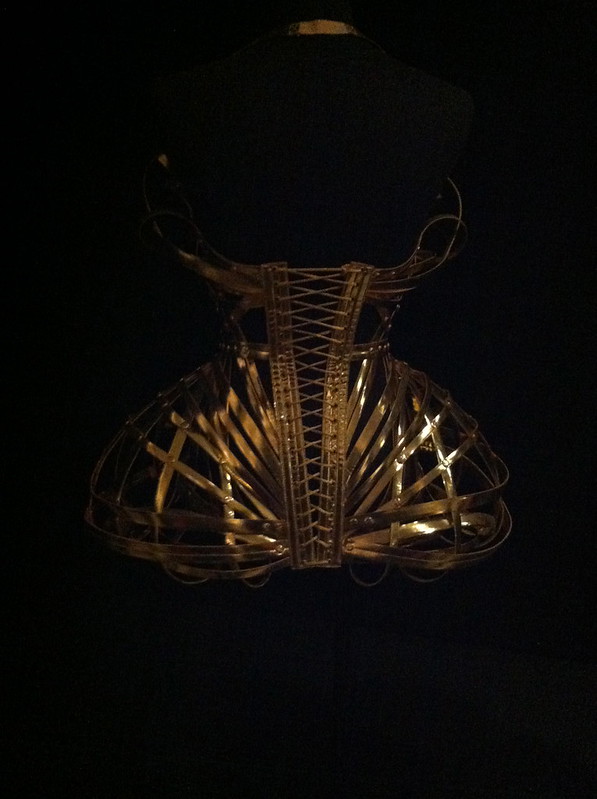
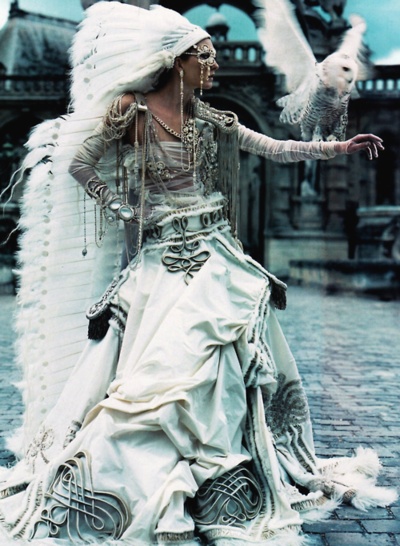
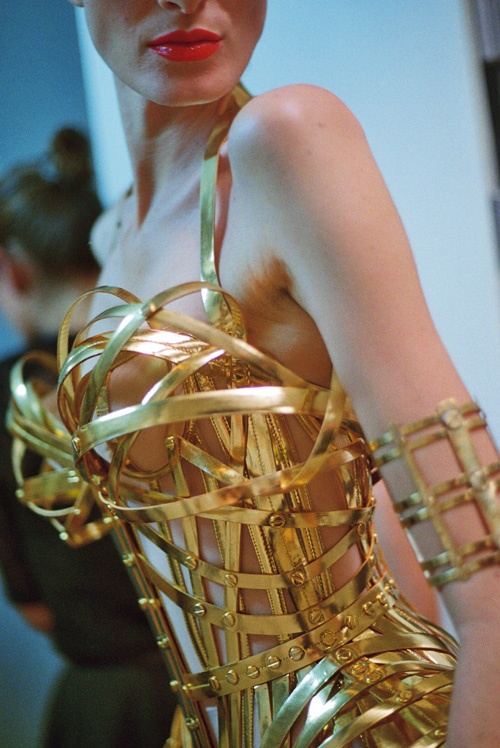
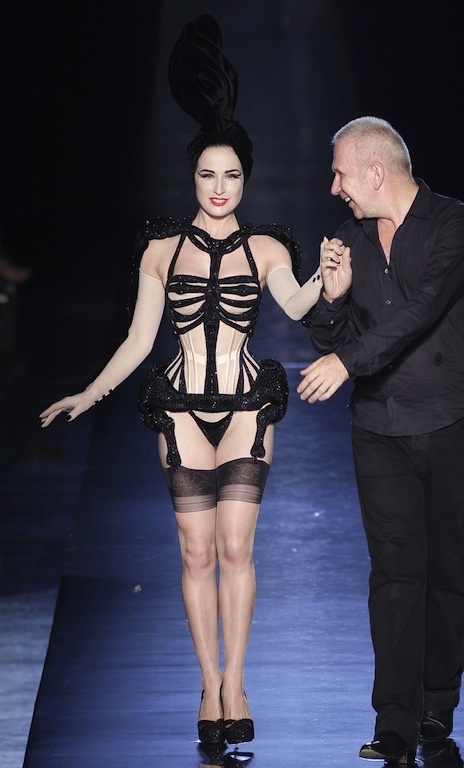
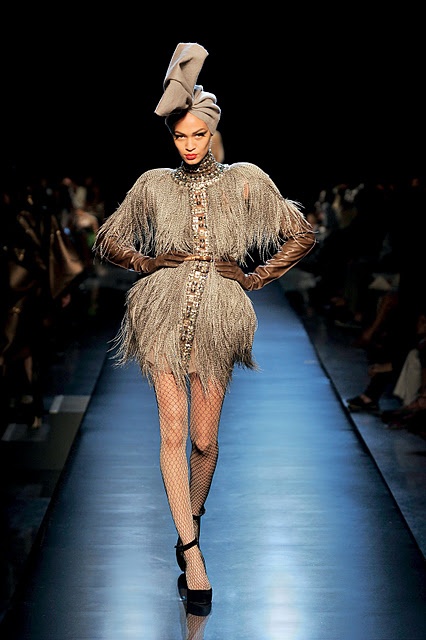
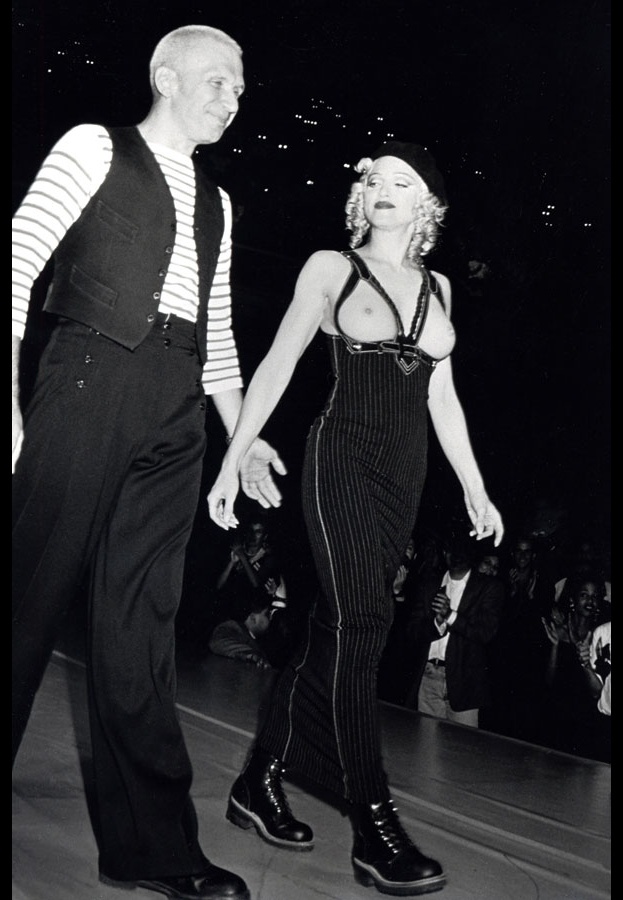
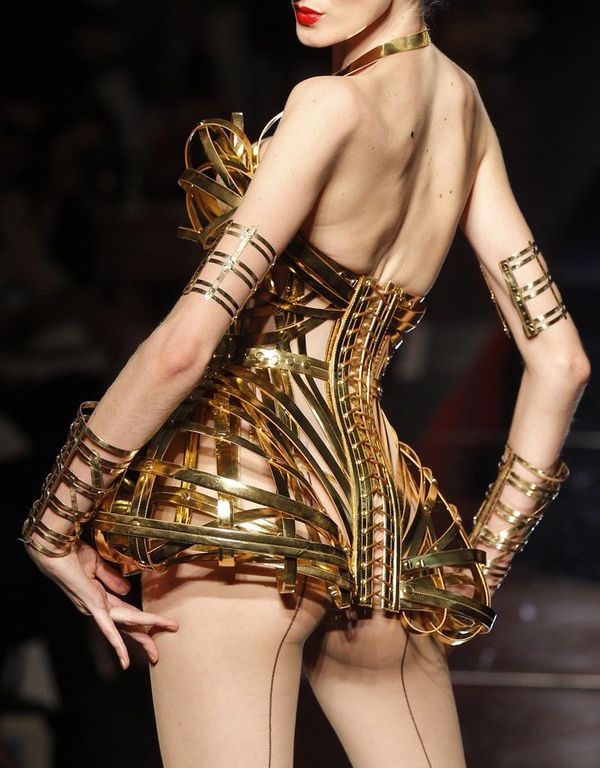
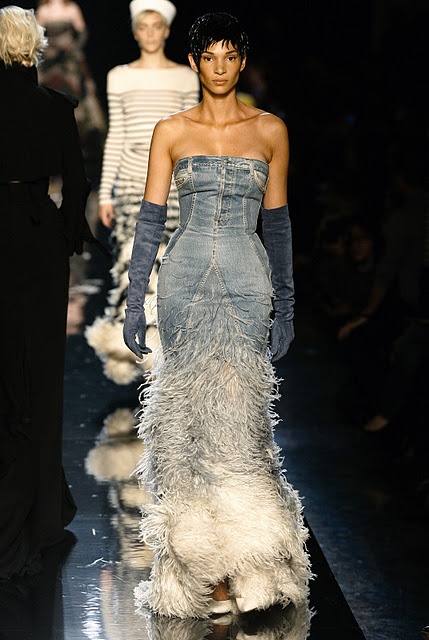
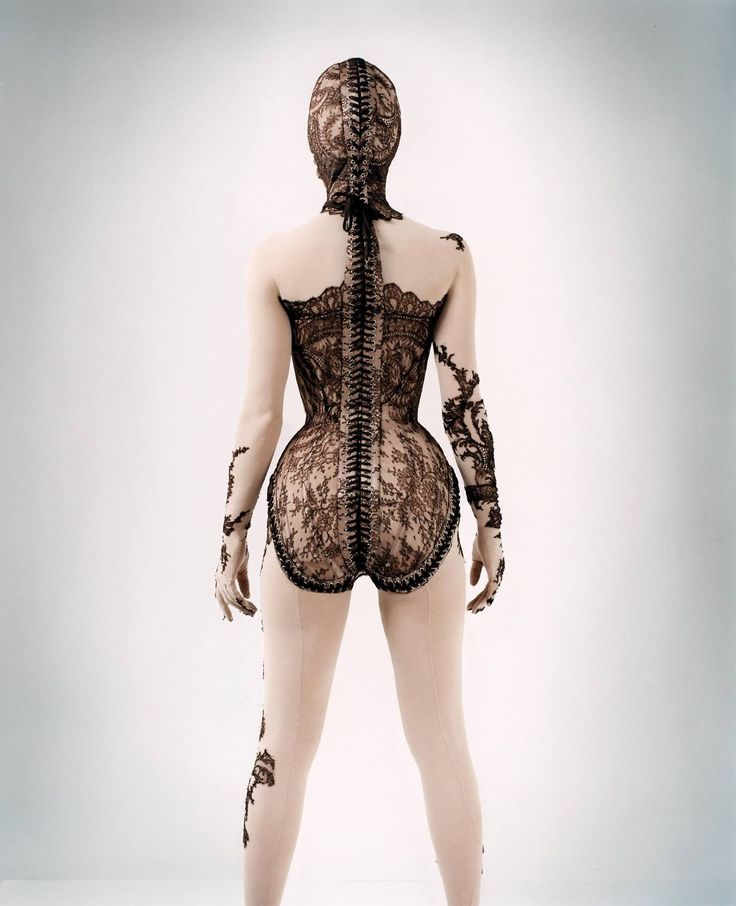
There are no words to describe how truly incredible these pieces are in person!! Viewing this exhibit while in the midst of my Sew Sexy-Sewalong mindset made me view many things in a completetly different way. And my recent fabric shopping trip (OMG, so much fun chatting and shopping with these three ladies!!) was certainly influenced by it (leather, metallic, print).

Even as I viewed the pieces and snapped these photos, I sensed a theme. I am, clearly, most drawn to the waistline and garments that highlight it. That nipped-in-ness is sexy to me. Whether it is on a metallic leather corset (my FAVORITE PIECE) or a striped, backless tshirt with a floor length train.

Watch the waist.

Jean Paul Gaultier @ The Brooklyn Museum

Untitled

Jean Paul Gaultier @ The Brooklyn Museum

Jean Paul Gaultier @ The Brooklyn Museum

Jean Paul Gaultier @ The Brooklyn Museum

Untitled

Jean Paul Gaultier @ The Brooklyn Museum

Jean Paul Gaultier @ The Brooklyn Museum

Jean Paul Gaultier @ The Brooklyn Museum

Jean Paul Gaultier @ The Brooklyn Museum

Jean Paul Gaultier @ The Brooklyn Museum

Jean Paul Gaultier @ The Brooklyn Museum

More photos here:

 Jean Paul Gaultier:
@
The Brooklyn Museum

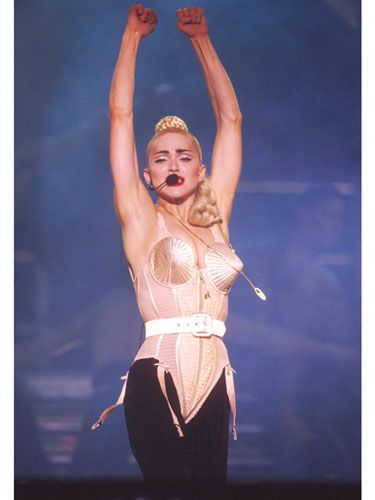
And I found a few of the pieces from the exhibit being worn:

fa78d4208d6411fcef8128ee08f10440 b2ce6541b573cb3037e5e2ace2e4da86 07aee1e4aaa2a5aa0792dcc2ffa0baa0 8dba024ef0754a0d4b8d240964a79986 03d3841d987b707910c88a7adfe17725 9e9f2ecd2cf80e2732e61df8103995b6 384b554374bfc308935bf17904bffa91 1e127acbc267b116e07c712abb3aba4a 5361040f1b9498054d0a29805823ee27 01ffcbff7ed4a4b2c5e32effcfe32b7b

PUNK: Chaos to Couture – A Handmaker’s Factory Review

“Tears, safety pins, rips all over the gaff, third rate tramp thing, that was purely really, lack of money. The arse of your pants falls out, you just use safety pins”
-Johnny Rotten of the Sex Pistols

This quote sums up the origins of the punk era, taken from one at its center, Johnny Rotten. I copied it from one of the walls in the Punk: Chaos to Couture exhibit currently on view at The Metropolitan Museum of Art, here in New York City. It was located towards the end of the rather large collection. Copying it was difficult because the area it was located in was dark, crowded and full of flashing light thrown off of the massive video display on a nearby wall. I felt compelled to copy it because it allowed me to identify the feeling of “something’s just off…” that I was afflicted with while taking everything in.

Let me explain myself. Directly beneath this Johnny Rotten quote reads:

“More than any other aspect of the punk ethos of do-it-yourself, the practice of destroy or deconstruction has had the greatest and most enduring impact on fashion.”

It continues on for a bit. Espousing all of the ways that punk style, method, material and attitude has influenced many of the designer featured in the exhibit. What the composer of this spiel apparently misses, which I saw clearly with reading these things one after the other, is the huge irony of the entire exhibit. Mr. Rotten’s quote tells you directly, punks wore their clothes that way because they had no choice! This style/lifestyle grew organically. It grew out of necessity. And it became cool (and political) because those who rocked the style were so awesome, so talented, so in your face their lack of money and torn, pinned clothing only made them better, more interesting, more desirable. So, a ritzy museum like the MET, which calls one of the toniest neighborhoods in NYC home, offering an exhibit on the fashion of the poor, downtrodden and disenfranchised is really quite amazing.
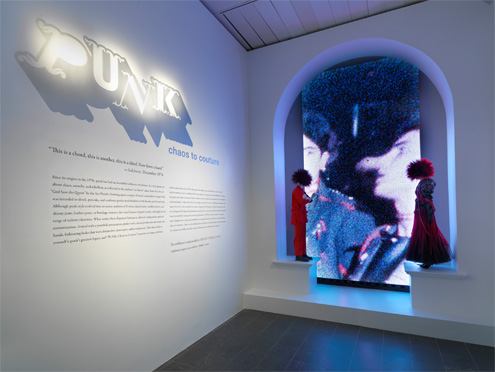
Title Wall Gallery/Image © The Metropolitan Museum of Art

When you walk into the chamber that punk claimed you are met with a massive, jarring video display that is Right. In. Your. Face. It’s followed with a reproduction of the filthy bathroom at CBGB and continues with the actual clothes made/worn/sold by punks and punk Godmother Vivienne Westwood and her god-children the Sex Pistols. The moody dark atmosphere of it all the sets bar at a height that the remainder of the exhibit fails to meet.

Facsimile of CBGB bathroom, New York, 1975/Image © The Metropolitan Museum of Art
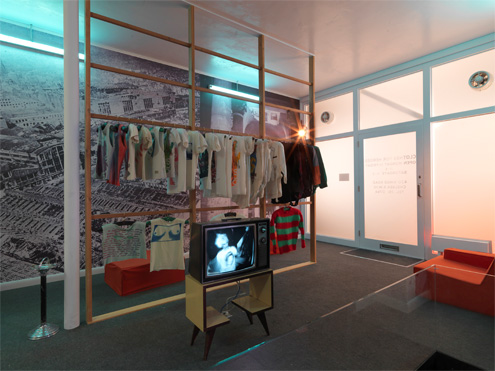
430 King’s Road Period Room/Image © The Metropolitan Museum of Art
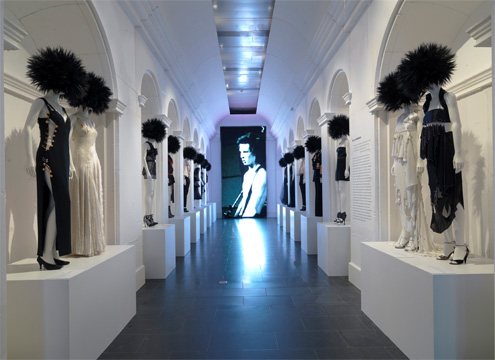
D.I.Y.: Hardware/Image © The Metropolitan Museum of Art

The above chamber does feature some vintage punk couture. However, from here on, many of the items featured are “punk inspired” designer clothes. Designer clothes that cost into the thousands of dollars. That is not punk. A neatly trimmed grocery store shopping bag paired with silk shantung pants does not make quite the same statement as safety pinning the ripped crotch of your pants together because you can’t afford to buy new ones. In my humble opinion. Strategically slashed designer jeans are not DIY. The do-it-yourself label cannot be applied to mass produced goods. Can it? Attaching two lengths of elastic to some black netting, and charging a fortune for it, is not a continuation of the punk era.

Don’t get me wrong. There are some absolutely stunning things in this collection. Particularly some additions by Alexander McQueen and this set of dresses made with hand painted fabric.
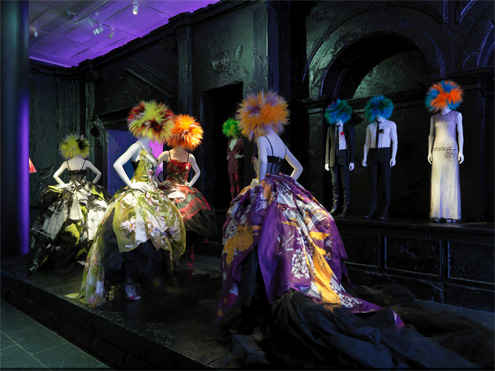
D.I.Y.: Graffiti & Agitprop/Image © The Metropolitan Museum of Art

But, unless Dolce and Gabanna painted and then wore these gowns themselves, can they really be DIY?

After you take in all of the color and slash and ironically contrary text spread around the place, you’re dumped out into a gift shop. A gift shop. Could they have ended on a less punk note? There is not one piece of free memorabilia for this collection. Well, if there was I surely did not see it. What you are given is the opportunity to spend $46 on a book about it. Or to buy a postcard with Sid Vicious scowling on it. Or a studded platform shoe key chain….

This photo, where I’m reflected in a sign pointing me toward the exhibit, is all I have to remember the experience by.
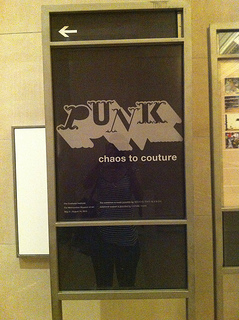
To visit Punk: Chaos to Couture online, click here.

This review originally appeared on Handmaker’s Factory.
Thanks to Nichola for making the arrangement for me!

Designers of Color in Fashion History :: A Handmaker’s Factory Series

Hi, again! I’ve popped back in to direct you to a bit of fashion history reading over at The Handmaker’s Factory blog. I’ve contributed my first article (of many, hopefully) and I’d love to know what you think!
Handmaker's Factory

Designers of Color in Fashion History

The words Haute Couture conjure up images of exclusivity, workmanship, wealth. It’s Paris. It’s Worth. It is a world inhabited by the few and coveted by the many. Both couturier and staff are masters with cloth, magicians of fit, maximizers of the feminine form. This elite group must work hard to earn and maintain their status, whilst satisfying the toniest of clientele.

To truly be a “haute couturier” one must contend with a strict set of rules, guidelines and restrictions. Claire B. Schaffer, the home sewists couture guru, states in the revised and updated edition of her work Couture Sewing Techniques, that the Chambre syndicale de la haute couture (or Parisian High Fashion Syndicate) tightly controls the use of the phrase “haute couture” and has ruthlessly enforced, federally regulated rules. Rules. Federal rules. For the makers of fabric works of art. Clearly, this is very serious business.

Despite all of this, despite the rules, despite the exclusivity there were some who were talented enough, savvy enough and tenacious enough to break through those barriers. One of them was named Jay Jaxon.

Mr. Jaxon was the very first Black haute couturier. He designed his first collection under the house of Jean-Louis Scherrer in the 1970s. Though this accomplishment was significant enough to earn him a congratulatory telephone call from the First Lady of the United States, “Lady Bird” Johnson, it is not celebrated, or even mentioned, during contemporary discussions of the evolution of haute couture. There is no mention of him in the prestigious Berg Fashion Library database. He is not mentioned alongside others who shattered barriers and blazed trails.

I only discovered him while browsing Michael McCollom’s The Way We Wore, a coffee table book about Black style. There he was, smiling in a grainy black and white shot taken in his Paris workroom. I was able to learn more about him from an article published in The Pittsburgh Press, and other publications, in January 1970. It would seem that Mr. Jaxon was not only the first African American haute courtier, he was the first American designer of any color to have the honor of working in a couture house.

An accidental fashion designer, Jaxon was well on his way to a career in law when a seamstress girlfriend, who was struggling with her dress, unwittingly led him to his calling. From cutting that first dress for her, then a pair of pants (pants!!) for himself he decided law wasn’t for him. He dropped out of school and worked as bank teller to earn the money for design school. His early work was sold in luxury New York City clothing stores like Bendel’s and Bonwit Teller. Once in Paris, he trained under Yves St. Laurent and Christian Dior in addition to Jean-Louis Scherrer.

In fact, according to Yvette de la Fontaine’s article, Jaxon, at only 24 years of age, was brought on to save the failing Scherrer house. Though much has been recorded about the Parisians eventual loss of his company, there is no mention of Jaxon and his attempt to prevent it from happening. He is not mentioned in connection with Dior or St. Laurent, either.

Although the French celebrated his arrival in Paris as the first black couturier, the emphasis on his race troubling to Jaxon, he has been virtually erased from their history. His New York Times obituary in 2006 details his work on films as recent as Mr. and Mrs. Smith, but his IMDB.com listing only features him as costume designer for one film.

Has this absence of information been caused by deliberate omissions? Accidental oversights? Where is Jay Jaxon in fashion’s history? And how many more like him have been left out?


Works Referenced:

Couture Sewing Techniques by Claire B. Schaffer

The Way We Wore by Michael McCollom

The Chambre syndicale de la haute couture

Jean-Louis Scherrer

Color photo of Jaxon’s designs from: http://sighswhispers.blogspot.com/2011/09/luxe-look.html

Yvette de la Fontaine’s archived Pittsburgh Press article: http://news.google.com/newspapers?id=iREcAAAAIBAJ&sjid=UlAEAAAAIBAJ&pg=7410%2C2283658

Jay Jaxon’s New York Times obituary: http://query.nytimes.com/gst/fullpage.html?res=9B07E6D8163AF934A2575BC0A9609C8B63