What is a doll?

What is a doll? That was the question at the center of my Legacy of Black Dolls lecture at Tatter.

How is defining something so simple complicated by history, geography, by gender, by economic class, by race and further considerations of who is allowed leisure, who is allowed to be a child? We, those of us enraptured by dolls, seek to illuminate these questions, and more, through historical explorations of doll history, memorabilia, contemporary doll collectors, new perspectives and representation in museums collections and more. But, those explorations don’t necessarily get us closer to the essential question – what is a doll?

I am on a journey of sorts to find an answer.

For my purposes, and what I think I set out to explore when I was invited to give the lecture, is closer to what Black writer and academic, Margo Jefferson, captured in her entry for the book Black Dolls from the Collection of Deborah Neff.

Jefferson states:

“Dolls are the only toys made in our image, the only human-like creatures’ children are given dominion over. You, the child, are the creator of an ordered existence: a miniature kingdom that can imitate or disrupt the logic of your everyday life, the life conceived of and run by adults. They do what they want with you. You do what you want with the doll. You’re loving, you’re fickle; you’re imperious and stern. You coo and comfort the doll, you hurl it down and spank it. You dress and undress the doll, as you are dressed and undressed. You speak to it, you speak as it, you speak for it. So much of your time goes to courting and evading adult attention. You reenact all this with your dolls. You try to improve on it giving them what you don’t get (not enough of anyway) from those humans who rule your life.”

How would you respond to the this question? What is a doll to you? Please comment, below.

Stephen Burrows: When Fashion Danced – A Handmaker’s Factory Review

A curator’s job must be so difficult. Deciding which bits of a vast history, body of work or era to include sounds immensely challenging. Perhaps, that is what makes it all the more impressive, and rewarding, when the job is done well. When I planned my visit to the Stephen Burrows exhibit on display at the Museum of the City of New York, I expected to see beautiful clothes arranged in an artful setting. But, both Mr. Burrows work and the museum met, and far exceeded, that expectation!

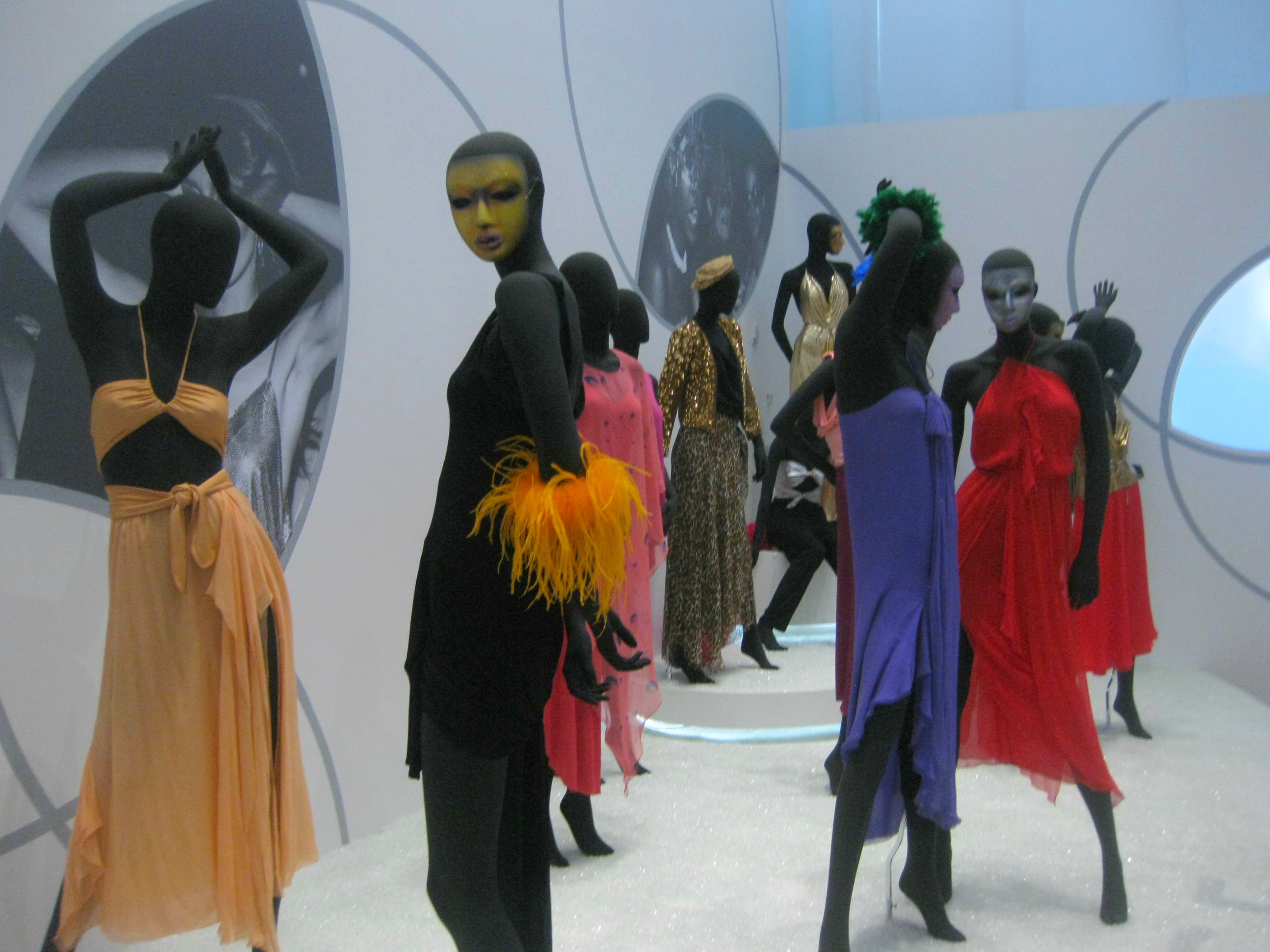
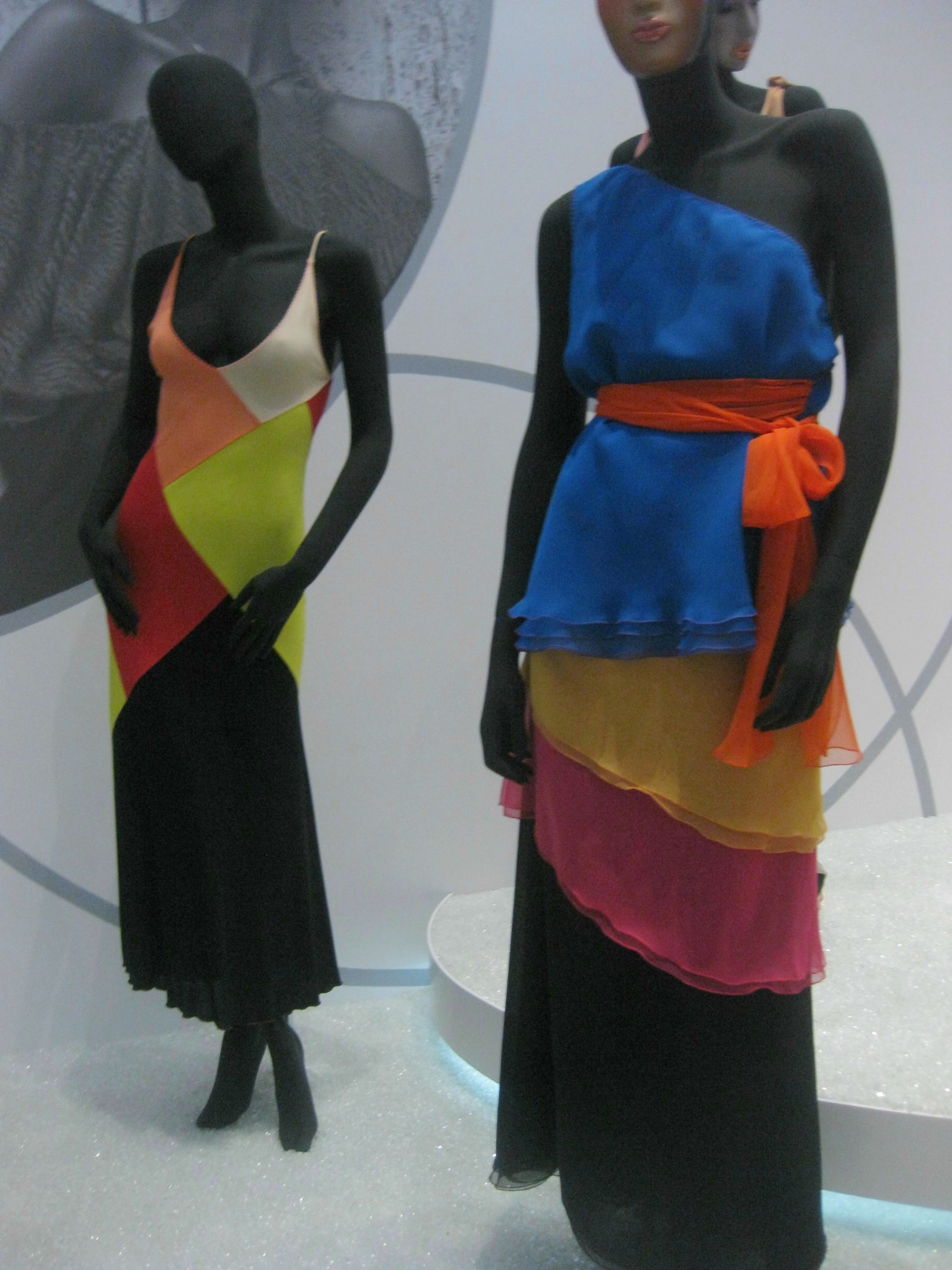
The very first thing you see when you enter the space that houses this collection is a massive photo of Grace Jones, outfitted in Burrows’ clothes. This image immediately sets the tone for the liveliness, beauty and attitude of the entire exhibit. Burrows’ work is an explosion of color, pattern, texture and, most of all, movement. Stephen Burrows: When Fashion Danced, is appropriately named.

The designer’s evolution is clear and the way the exhibit has been arranged encourages you to view the pieces in the order of that evolution. Positioned just after Ms. Jones are several sketches. An introduction of sorts.

Leather, fringe, fur, glamour give way to jersey, silk chiffon, sequins, glamour. Even a coat made of wool felt drapes in such a way as to appear weightless. I was also struck by how body conscious and sleek many of the pieces were while still remaining fun and elegant. Quite the accomplishment.

Taking it all in as one evokes a feeling that Iman succinctly sums up.

Even the room is cloaked in billowy fabric, carrying the movement from the clothing up the walls to the ceiling.

IMG_7973 IMG_7991

The sparse color of the ceiling, background and platforms create the perfect backdrop for this color explosion. The deep ebony mannequins setting them off in a way that any other color just couldn’t do. Their posture communicating self assurance, elegance, class, playfulness, sex appeal.

IMG_7933 IMG_7953 IMG_7935 IMG_7937 IMG_7954 IMG_7964

Stephen Burrows continues to enjoy a thriving career and made a splash at the opening ceremony for the exhibit. It’s so wonderful to see someone receive their honors and accolades during their lifetime. To have the chance to see the impact that their influence has had on their industry. What an amazing privilege.

Stephen+Burrows+Stephen+Burrows+Fashion+Danced+ZzFg-lruMEMxPhoto credit-http://www.zimbio.com/photos/Stephen+Burrows/Stephen+Burrows+Fashion+Danced+Exhibit/ZzFg-lruMEM

It’s thrilling to see him smile and mingle with those whose careers mirror his own rise. Iman, Bethann Hardison, and more of the African American glitterati gathered to reminisce with him and show that they still look fabulous in his clothes. This exhibition is just one in a long line of retrospectives, documentary films, awards and fashion milestones. After more than 45 years in the fashion business, he can also add to his list of distinctions the honor of styling for a range that includes collector edition Barbie dolls and the First Lady of the United States.

His continued success and growth into a fashion mogul that has prospered with the times, he’s on Twitter AND Instagram creating his own buzz about his work, makes me think of his contemporaries (like Jaxson and Kelly) who did not live to do the same.  With a few of his vintage pieces for sale on Etsy and Ebay, including sewing patterns(!!) and invitations from the Chambre Syndicale de la Mode to present his collections in Paris, make me hopeful for more of his work for years to come.

IMG_7993This review originally appeared on Handmaker’s Factory.
Thanks, again, to Nichola for making the arrangements for me!

Designers of Color in Fashion History :: A Handmaker’s Factory Series

Hi, again! I’ve popped back in to direct you to a bit of fashion history reading over at The Handmaker’s Factory blog. I’ve contributed my first article (of many, hopefully) and I’d love to know what you think!
Handmaker's Factory

Designers of Color in Fashion History

The words Haute Couture conjure up images of exclusivity, workmanship, wealth. It’s Paris. It’s Worth. It is a world inhabited by the few and coveted by the many. Both couturier and staff are masters with cloth, magicians of fit, maximizers of the feminine form. This elite group must work hard to earn and maintain their status, whilst satisfying the toniest of clientele.

To truly be a “haute couturier” one must contend with a strict set of rules, guidelines and restrictions. Claire B. Schaffer, the home sewists couture guru, states in the revised and updated edition of her work Couture Sewing Techniques, that the Chambre syndicale de la haute couture (or Parisian High Fashion Syndicate) tightly controls the use of the phrase “haute couture” and has ruthlessly enforced, federally regulated rules. Rules. Federal rules. For the makers of fabric works of art. Clearly, this is very serious business.

Despite all of this, despite the rules, despite the exclusivity there were some who were talented enough, savvy enough and tenacious enough to break through those barriers. One of them was named Jay Jaxon.

Mr. Jaxon was the very first Black haute couturier. He designed his first collection under the house of Jean-Louis Scherrer in the 1970s. Though this accomplishment was significant enough to earn him a congratulatory telephone call from the First Lady of the United States, “Lady Bird” Johnson, it is not celebrated, or even mentioned, during contemporary discussions of the evolution of haute couture. There is no mention of him in the prestigious Berg Fashion Library database. He is not mentioned alongside others who shattered barriers and blazed trails.

I only discovered him while browsing Michael McCollom’s The Way We Wore, a coffee table book about Black style. There he was, smiling in a grainy black and white shot taken in his Paris workroom. I was able to learn more about him from an article published in The Pittsburgh Press, and other publications, in January 1970. It would seem that Mr. Jaxon was not only the first African American haute courtier, he was the first American designer of any color to have the honor of working in a couture house.

An accidental fashion designer, Jaxon was well on his way to a career in law when a seamstress girlfriend, who was struggling with her dress, unwittingly led him to his calling. From cutting that first dress for her, then a pair of pants (pants!!) for himself he decided law wasn’t for him. He dropped out of school and worked as bank teller to earn the money for design school. His early work was sold in luxury New York City clothing stores like Bendel’s and Bonwit Teller. Once in Paris, he trained under Yves St. Laurent and Christian Dior in addition to Jean-Louis Scherrer.

In fact, according to Yvette de la Fontaine’s article, Jaxon, at only 24 years of age, was brought on to save the failing Scherrer house. Though much has been recorded about the Parisians eventual loss of his company, there is no mention of Jaxon and his attempt to prevent it from happening. He is not mentioned in connection with Dior or St. Laurent, either.

Although the French celebrated his arrival in Paris as the first black couturier, the emphasis on his race troubling to Jaxon, he has been virtually erased from their history. His New York Times obituary in 2006 details his work on films as recent as Mr. and Mrs. Smith, but his IMDB.com listing only features him as costume designer for one film.

Has this absence of information been caused by deliberate omissions? Accidental oversights? Where is Jay Jaxon in fashion’s history? And how many more like him have been left out?


Works Referenced:

Couture Sewing Techniques by Claire B. Schaffer

The Way We Wore by Michael McCollom

The Chambre syndicale de la haute couture

Jean-Louis Scherrer

Color photo of Jaxon’s designs from: http://sighswhispers.blogspot.com/2011/09/luxe-look.html

Yvette de la Fontaine’s archived Pittsburgh Press article: http://news.google.com/newspapers?id=iREcAAAAIBAJ&sjid=UlAEAAAAIBAJ&pg=7410%2C2283658

Jay Jaxon’s New York Times obituary: http://query.nytimes.com/gst/fullpage.html?res=9B07E6D8163AF934A2575BC0A9609C8B63