Annie in Indigo

Annie in Indigo đź’™

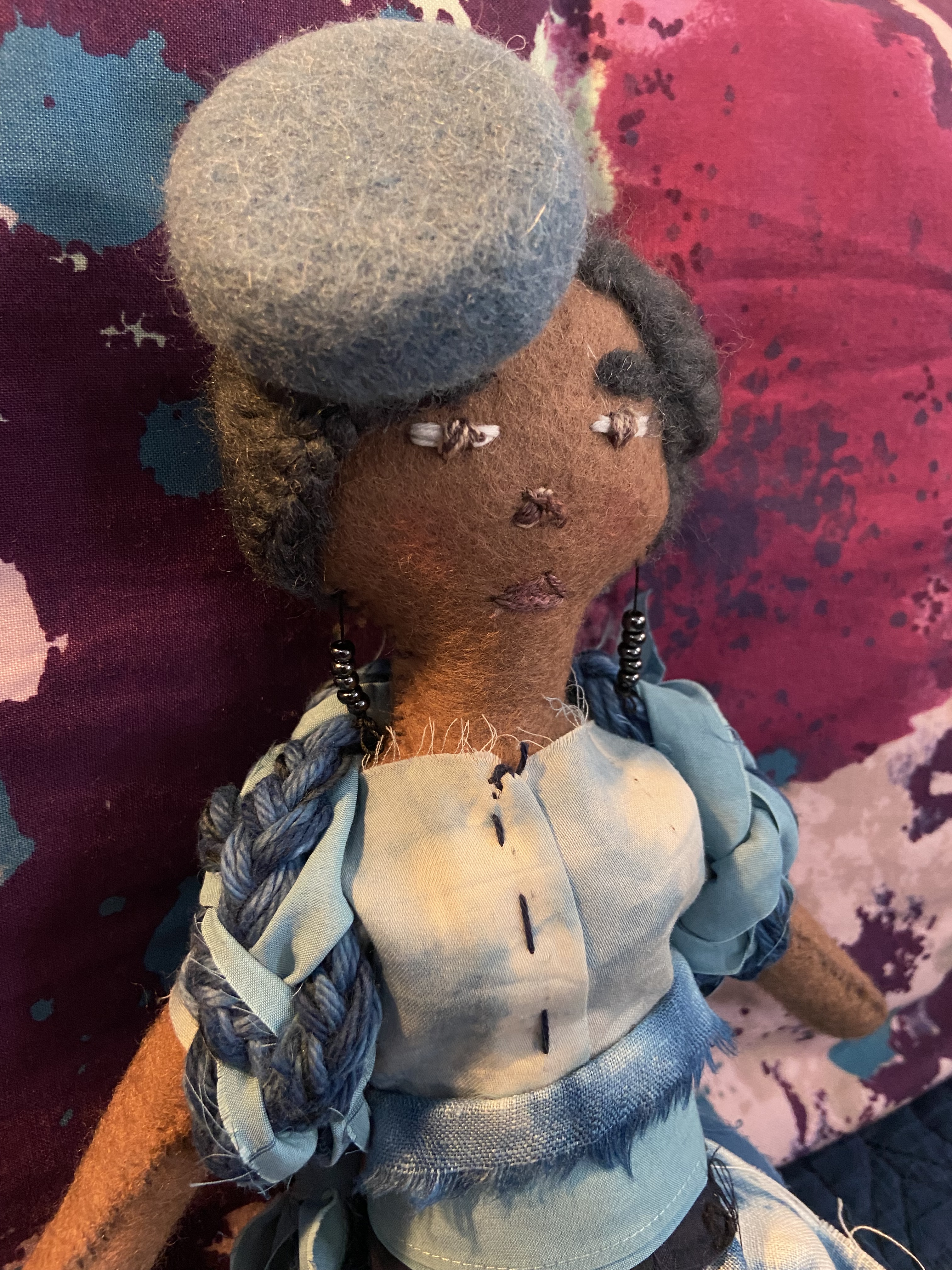
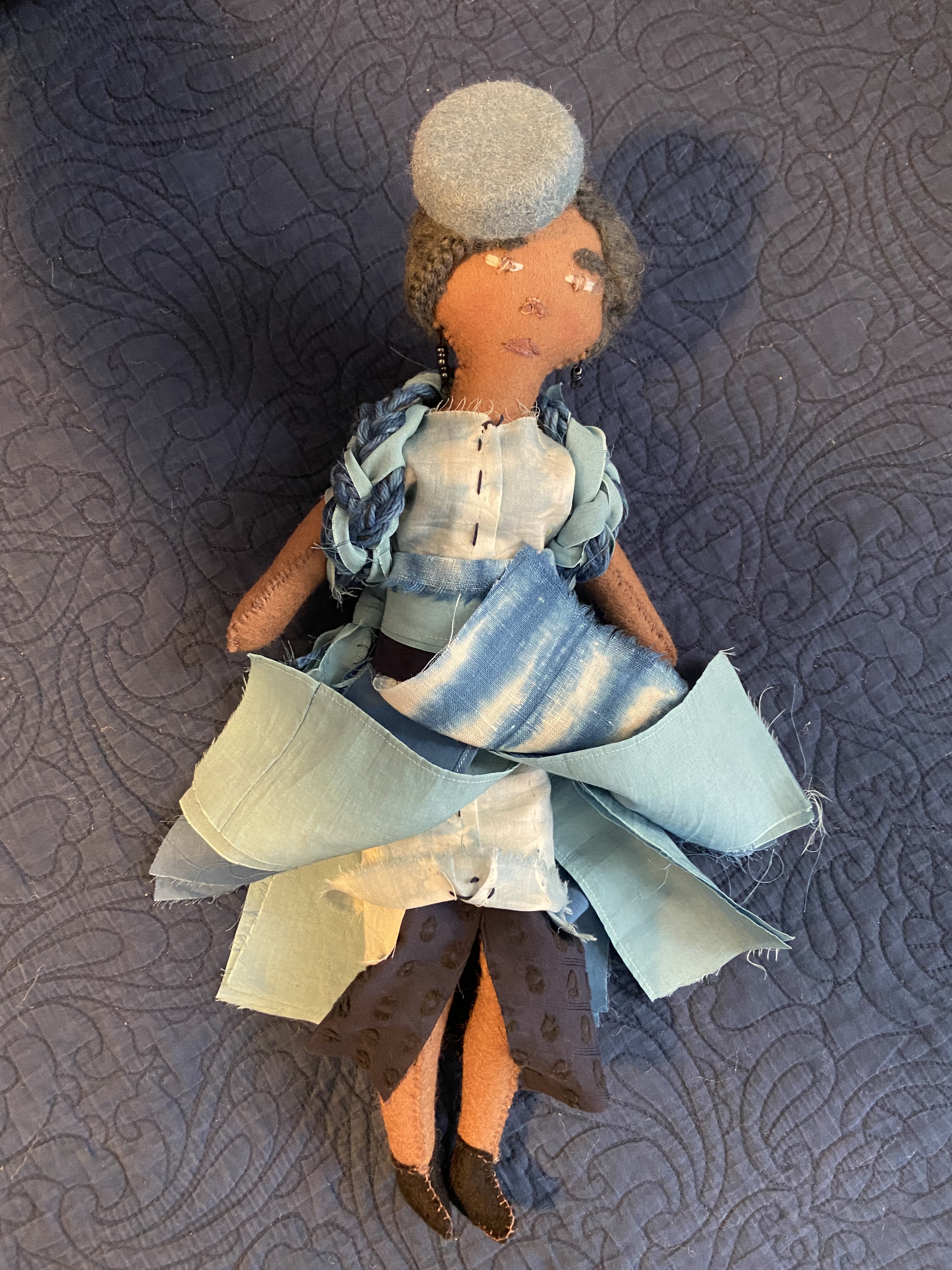
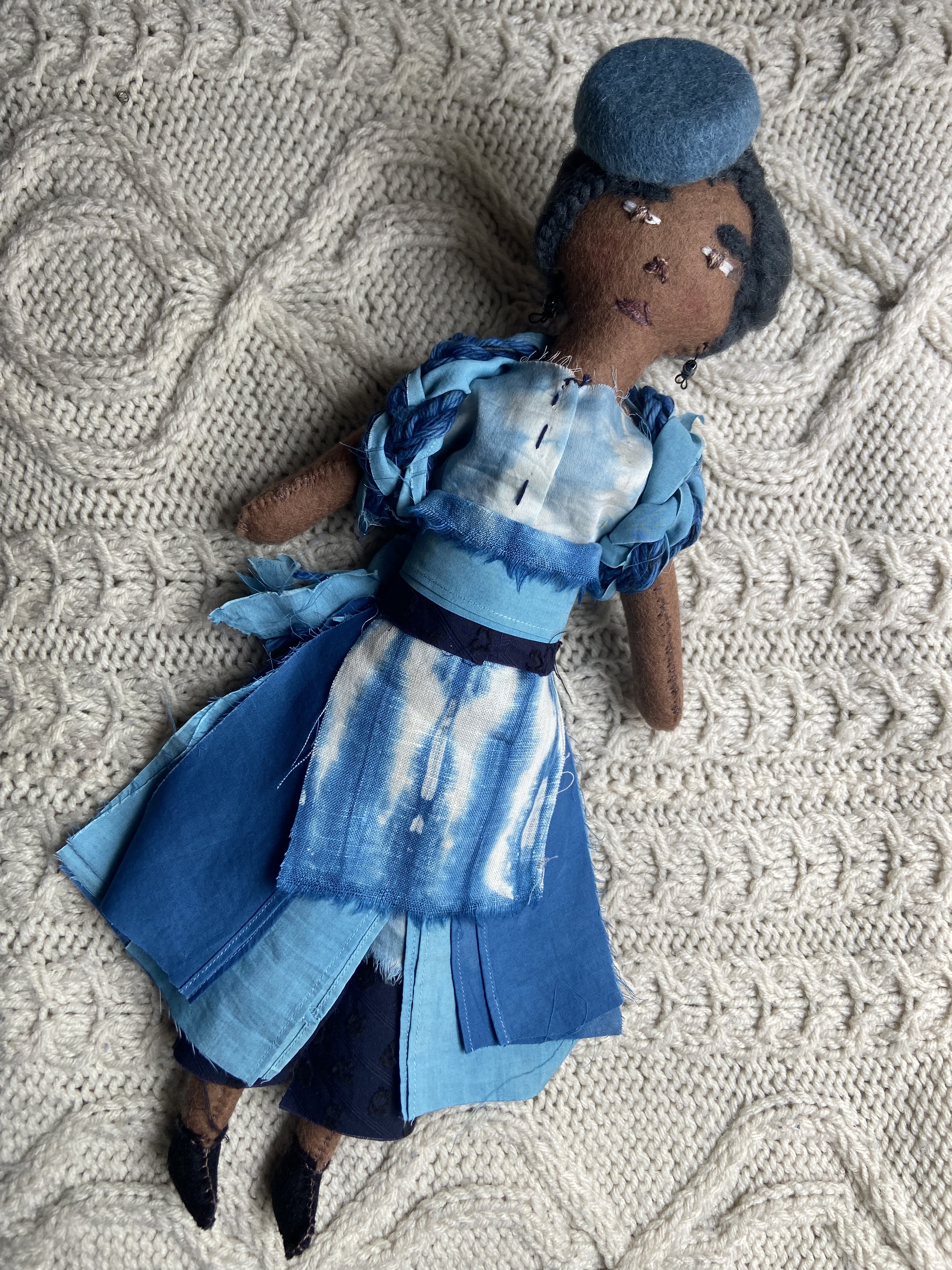
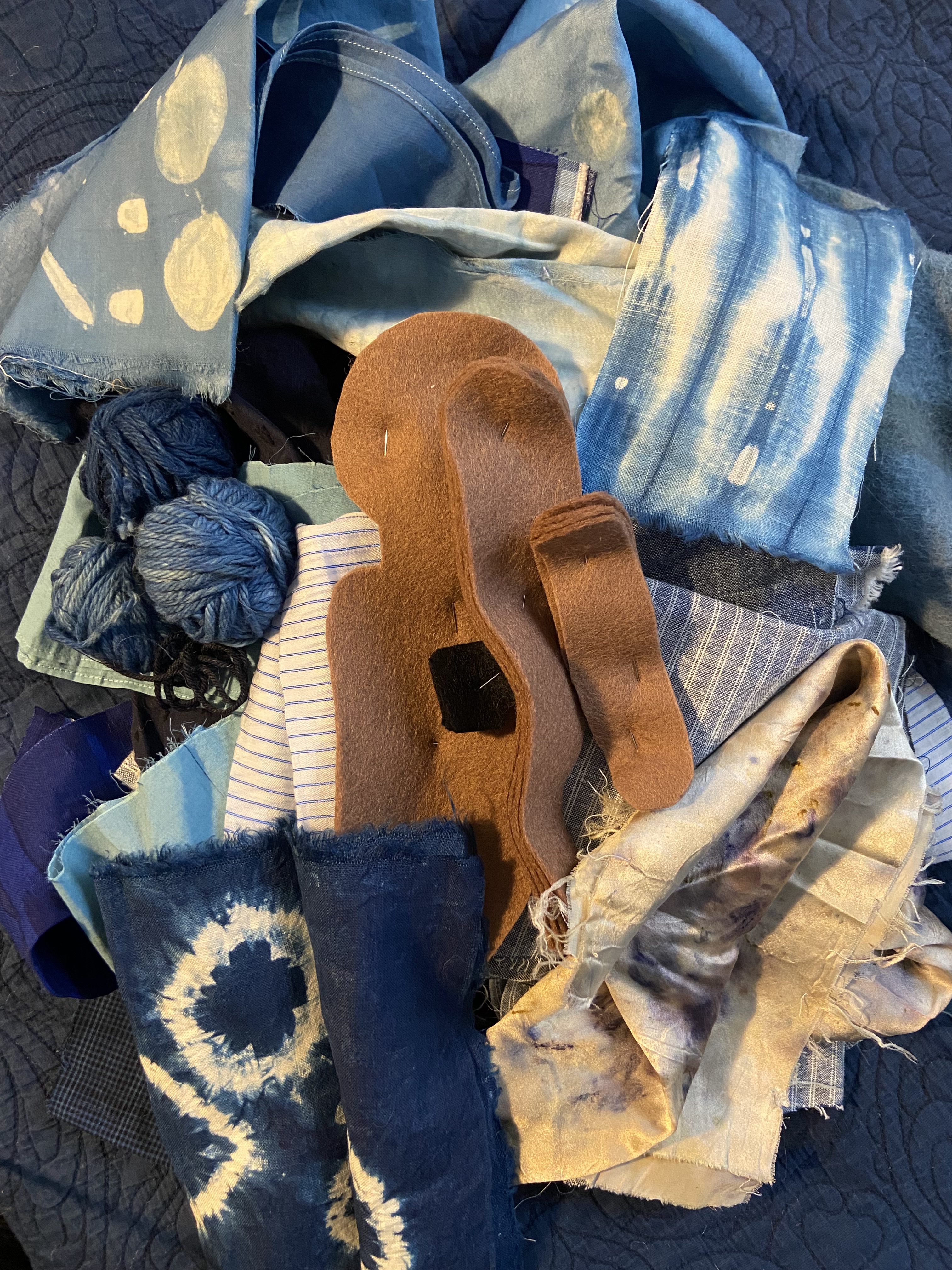
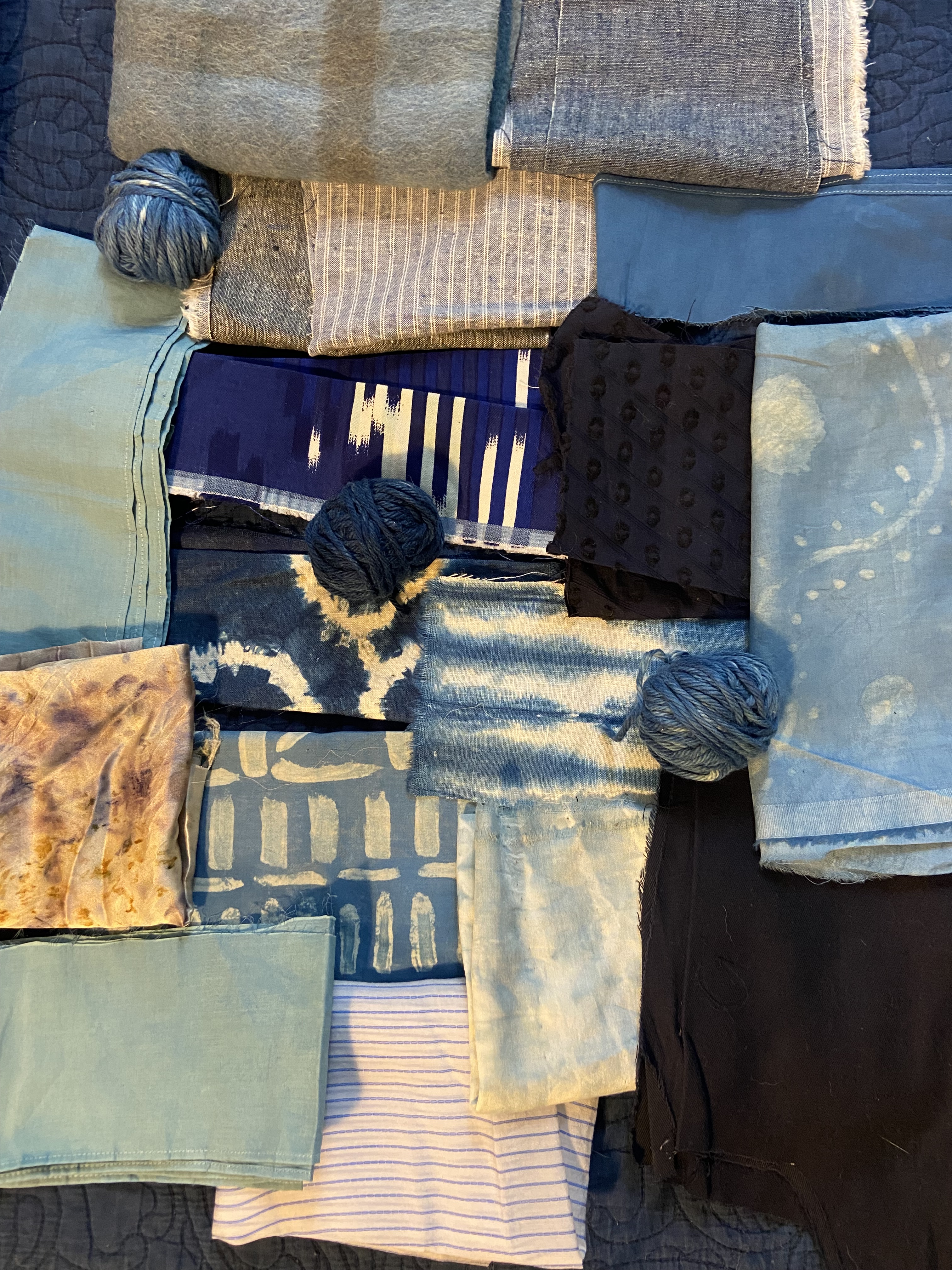
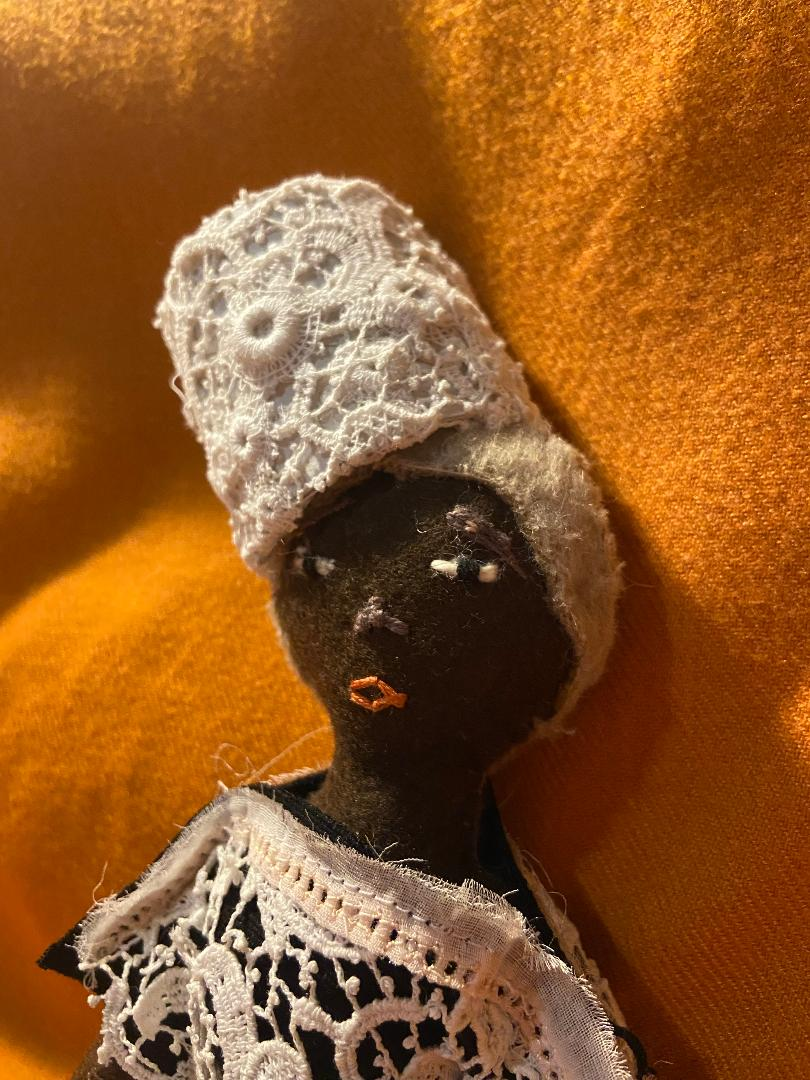
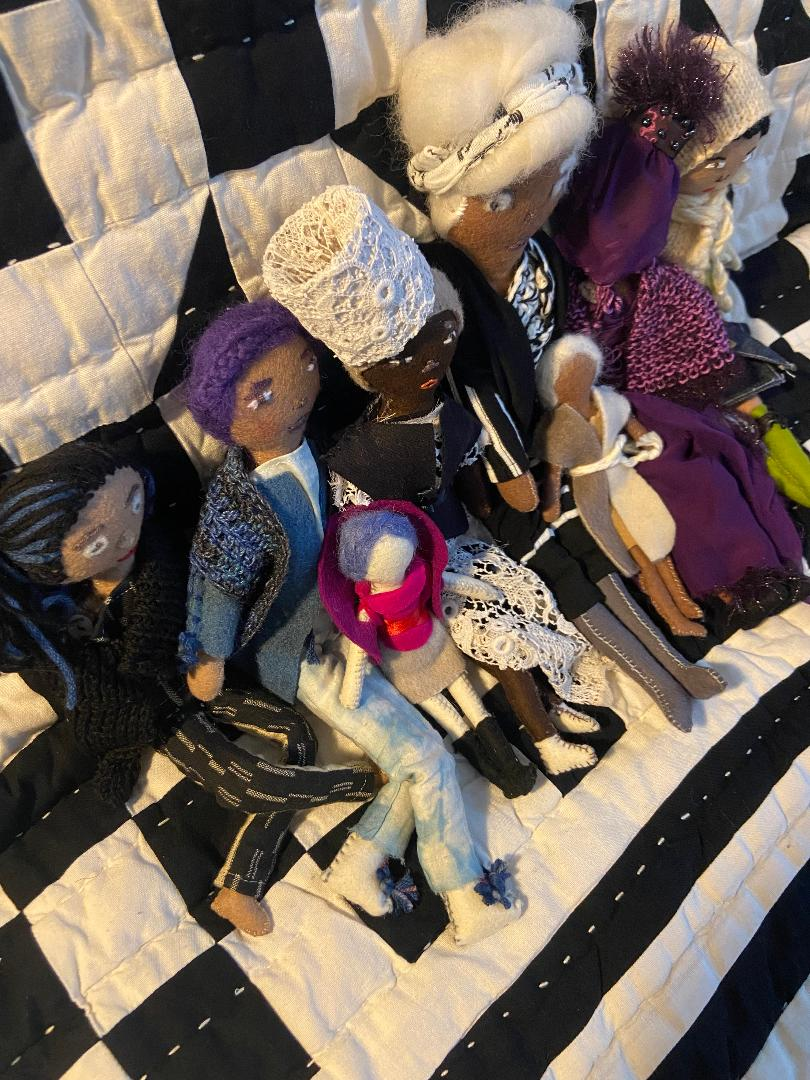
Inspired by celebrated and award-winning costume designer, Ruth Carter‘s color palette for actress, Wunmi Mosaku‘s character, Annie, in Ryan and Zinzi Cogler’s film, Sinners, which also starred Michael B. Jordan. She was made for SCRAPTACULAR, Blue: The Tatter Textile Library’s silent auction.

She will be my first doll up for sale, the only one to fly away. That she will live with someone who loves and supports Tatter, and therefore loves textiles and all that they intersect with, that seems fitting.

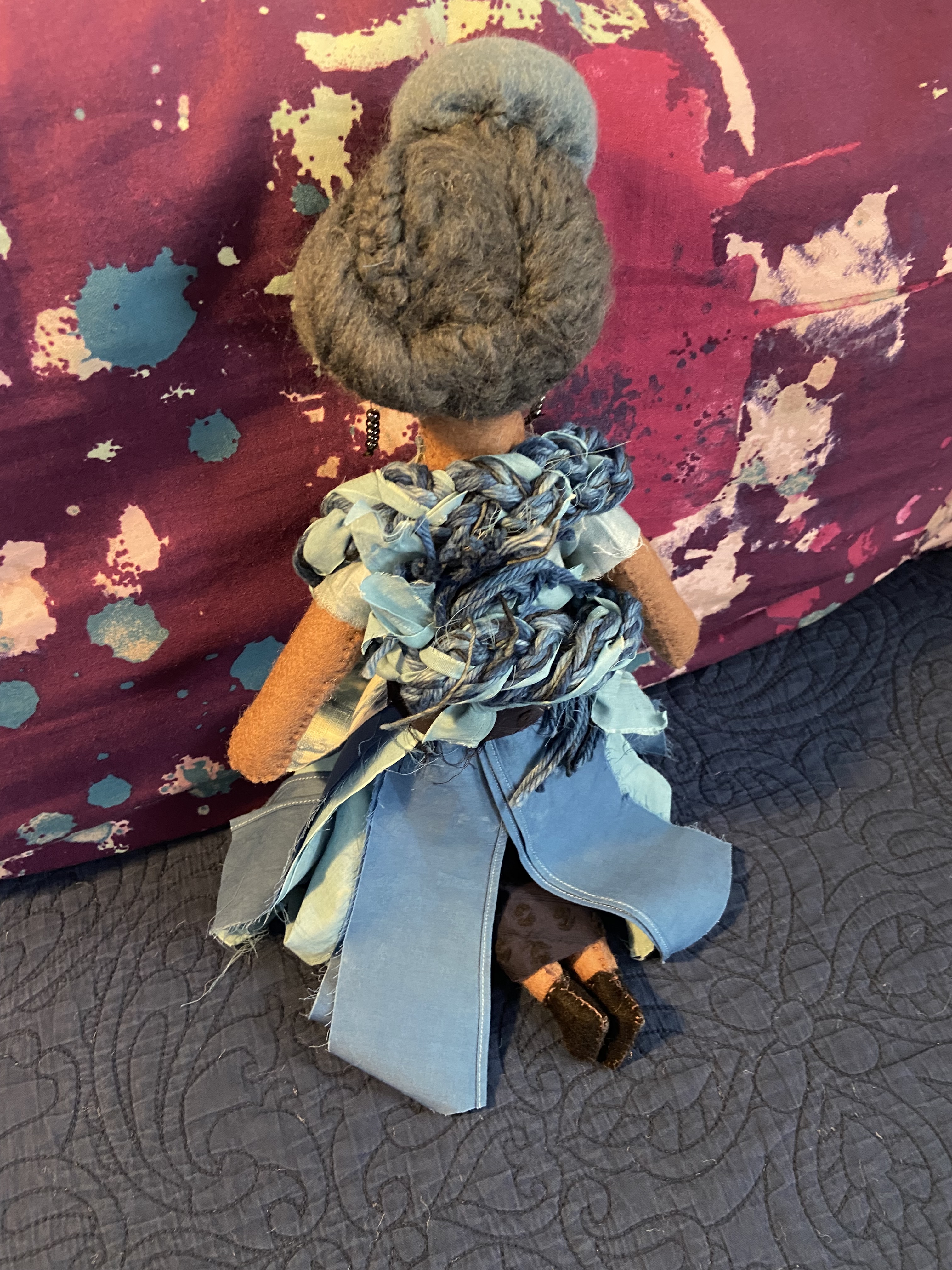
Annie is adorned entirely in scrap textiles, all but one is indigo dyed. Her body and garments are all handsewn, absolutely no machine stitching (made by me) on this one.

Her hair is wool roving, both braided and needle felted and her face features needle felted brows and embroidered eyes, nose and mouth. Hints of blush soften her cheeks while bead dangle earrings add a special touch. Her body is button jointed with hinged knees for articulated posing.

The indigo fabrics were dyed years and years apart. Some at @textileartscenter with newly made friends who have become family. And others more recently resist dyed @prattdyegarden and batch dyed garments @agatheringofstitches with, you guessed it, newly made friends. The yarn braided together with strips of fabric was dyed by @betterthanjam here in Brooklyn. The only non-indigo piece is a scrap from fabric given to me from @diaryofasewingfanatic’s fabric cave which continues the theme of love and community being an integral part of making Annie.

I hope you love her and that she’s loved in her new home.

What is a doll?

What is a doll? That was the question at the center of my Legacy of Black Dolls lecture at Tatter.

How is defining something so simple complicated by history, geography, by gender, by economic class, by race and further considerations of who is allowed leisure, who is allowed to be a child? We, those of us enraptured by dolls, seek to illuminate these questions, and more, through historical explorations of doll history, memorabilia, contemporary doll collectors, new perspectives and representation in museums collections and more. But, those explorations don’t necessarily get us closer to the essential question – what is a doll?

I am on a journey of sorts to find an answer.

For my purposes, and what I think I set out to explore when I was invited to give the lecture, is closer to what Black writer and academic, Margo Jefferson, captured in her entry for the book Black Dolls from the Collection of Deborah Neff.

Jefferson states:

“Dolls are the only toys made in our image, the only human-like creatures’ children are given dominion over. You, the child, are the creator of an ordered existence: a miniature kingdom that can imitate or disrupt the logic of your everyday life, the life conceived of and run by adults. They do what they want with you. You do what you want with the doll. You’re loving, you’re fickle; you’re imperious and stern. You coo and comfort the doll, you hurl it down and spank it. You dress and undress the doll, as you are dressed and undressed. You speak to it, you speak as it, you speak for it. So much of your time goes to courting and evading adult attention. You reenact all this with your dolls. You try to improve on it giving them what you don’t get (not enough of anyway) from those humans who rule your life.”

How would you respond to the this question? What is a doll to you? Please comment, below.

Doll Renaissance

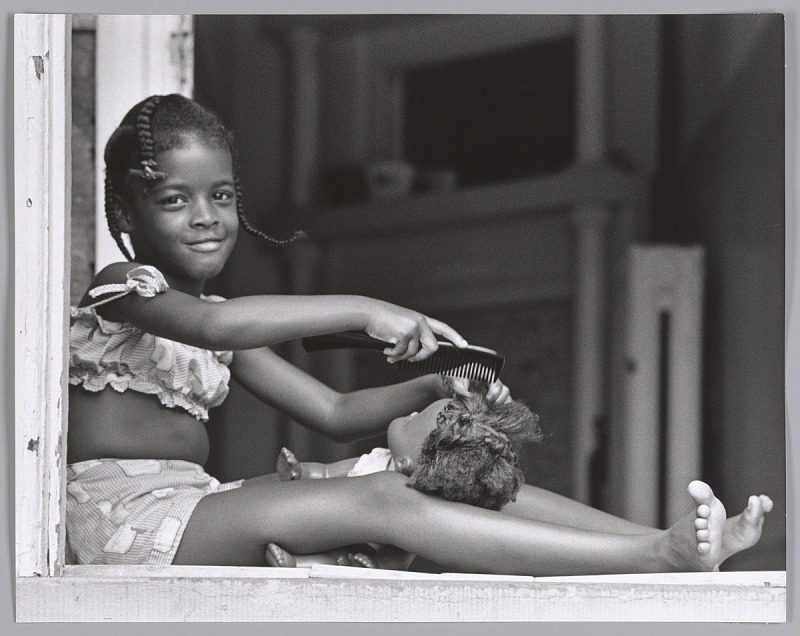
Williams, Milton. Monique fixes her doll’s hair on her babysitter’s doorstep. September 21, 1979. 2011.15.105. National Museum of African American History and Culture Collection. Washington, D.C.

“They induce a rapture in this viewer. They say: I am black and comely in all conceivable ways. I am varying shades of black, brown and beige. I am decorous, impish, fearsome and wise. They say: I have my vanity. (Gaze on my dark, lustrous eyelashes and smartly-coiffed hair.) They say: I have my griefs. (Count the tears on my cheeks.)”
– Margo Jefferson, Black Dolls

I am beyond delighted to return to blogging to share that I have been enraptured by all things doll.

Through a series of fortunate events, I was asked to teach a series of doll-making workshops at BLUE: The Tatter Textile Library, in Brooklyn, New York. This offer to teach has turned into a renewed passion for dollmaking and Black doll history.

Born out of the lecture I gave on the Legacy of Black Dolls at BLUE: The Tatter Textile Library I have reaffirmed my deep attachment to dolls – making and researching their history. I am already deeper and more confident in my making practice and am exploring research facilities, libraries, museums and archives and delving into monographs and collection catalogs to see what doll-related goodies I can find.

This academic year has been busy and promising. But I am mindful to continue thinking of this specific avenue of inquiry not only in box checking career terms, but remaining clear in my purpose to learn and make for my own joy and edification. As well as the joy of sharing with others. Nothing quite does that like the handling of teeny limbs and garments and uncovering the beauty of a well-worn doll, exclaimed over with like-minded folks.

It is my hope to return to sharing here on this blog. To spend time drafting posts and sharing knowledge. To provide a place for us to connect and share. To share updates and news. To post about dolls in all their expansive glory.

I will return to share more about my work at Tatter and what’s coming up for me and the dolls.

PUNK: Chaos to Couture – A Handmaker’s Factory Review

“Tears, safety pins, rips all over the gaff, third rate tramp thing, that was purely really, lack of money. The arse of your pants falls out, you just use safety pins”
-Johnny Rotten of the Sex Pistols

This quote sums up the origins of the punk era, taken from one at its center, Johnny Rotten. I copied it from one of the walls in the Punk: Chaos to Couture exhibit currently on view at The Metropolitan Museum of Art, here in New York City. It was located towards the end of the rather large collection. Copying it was difficult because the area it was located in was dark, crowded and full of flashing light thrown off of the massive video display on a nearby wall. I felt compelled to copy it because it allowed me to identify the feeling of “something’s just off…” that I was afflicted with while taking everything in.

Let me explain myself. Directly beneath this Johnny Rotten quote reads:

“More than any other aspect of the punk ethos of do-it-yourself, the practice of destroy or deconstruction has had the greatest and most enduring impact on fashion.”

It continues on for a bit. Espousing all of the ways that punk style, method, material and attitude has influenced many of the designer featured in the exhibit. What the composer of this spiel apparently misses, which I saw clearly with reading these things one after the other, is the huge irony of the entire exhibit. Mr. Rotten’s quote tells you directly, punks wore their clothes that way because they had no choice! This style/lifestyle grew organically. It grew out of necessity. And it became cool (and political) because those who rocked the style were so awesome, so talented, so in your face their lack of money and torn, pinned clothing only made them better, more interesting, more desirable. So, a ritzy museum like the MET, which calls one of the toniest neighborhoods in NYC home, offering an exhibit on the fashion of the poor, downtrodden and disenfranchised is really quite amazing.
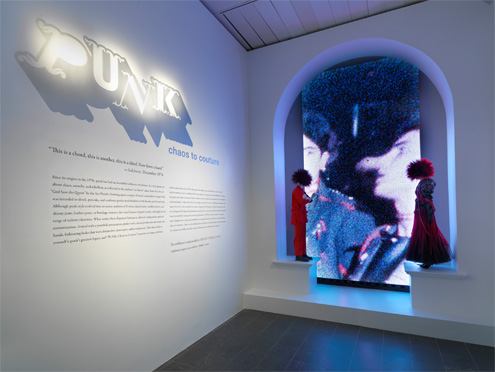
Title Wall Gallery/Image © The Metropolitan Museum of Art

When you walk into the chamber that punk claimed you are met with a massive, jarring video display that is Right. In. Your. Face. It’s followed with a reproduction of the filthy bathroom at CBGB and continues with the actual clothes made/worn/sold by punks and punk Godmother Vivienne Westwood and her god-children the Sex Pistols. The moody dark atmosphere of it all the sets bar at a height that the remainder of the exhibit fails to meet.
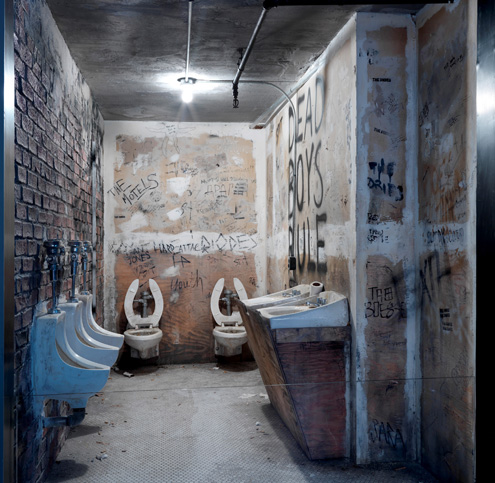
Facsimile of CBGB bathroom, New York, 1975/Image © The Metropolitan Museum of Art
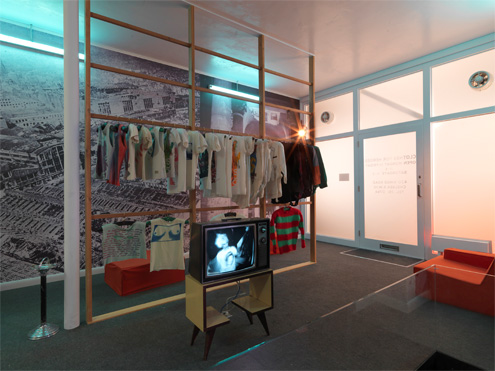
430 King’s Road Period Room/Image © The Metropolitan Museum of Art
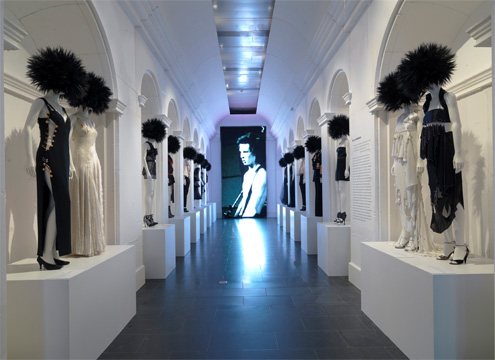
D.I.Y.: Hardware/Image © The Metropolitan Museum of Art

The above chamber does feature some vintage punk couture. However, from here on, many of the items featured are “punk inspired” designer clothes. Designer clothes that cost into the thousands of dollars. That is not punk. A neatly trimmed grocery store shopping bag paired with silk shantung pants does not make quite the same statement as safety pinning the ripped crotch of your pants together because you can’t afford to buy new ones. In my humble opinion. Strategically slashed designer jeans are not DIY. The do-it-yourself label cannot be applied to mass produced goods. Can it? Attaching two lengths of elastic to some black netting, and charging a fortune for it, is not a continuation of the punk era.

Don’t get me wrong. There are some absolutely stunning things in this collection. Particularly some additions by Alexander McQueen and this set of dresses made with hand painted fabric.
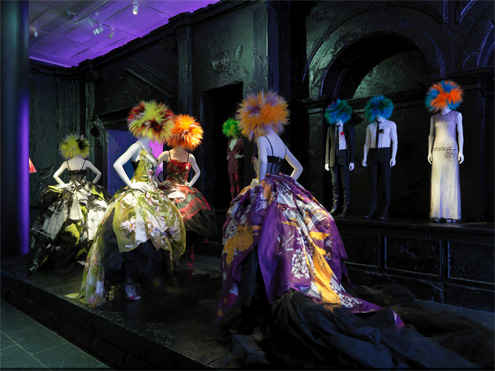
D.I.Y.: Graffiti & Agitprop/Image © The Metropolitan Museum of Art

But, unless Dolce and Gabanna painted and then wore these gowns themselves, can they really be DIY?

After you take in all of the color and slash and ironically contrary text spread around the place, you’re dumped out into a gift shop. A gift shop. Could they have ended on a less punk note? There is not one piece of free memorabilia for this collection. Well, if there was I surely did not see it. What you are given is the opportunity to spend $46 on a book about it. Or to buy a postcard with Sid Vicious scowling on it. Or a studded platform shoe key chain….

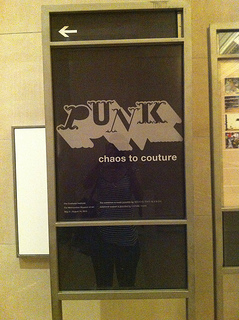
This photo, where I’m reflected in a sign pointing me toward the exhibit, is all I have to remember the experience by.
To visit Punk: Chaos to Couture online, click here.

This review originally appeared on Handmaker’s Factory.
Thanks to Nichola for making the arrangement for me!